Feng Shui: Complete Beginner’s Guide to Balance Energy
Feng Shui is the ancient Chinese art of arranging your environment to create harmony, positive energy, and prosperity. The way your home or office is designed directly affects your emotions, health, relationships, and success. Feng Shui helps you align your space with natural energy so that life flows more smoothly.
In today’s stressful world, many people are turning to Feng Shui for peace of mind, financial growth, better relationships, and emotional balance. This beginner-friendly guide explains everything you need to know about Feng Shui in simple language.
What Is Feng Shui?
Feng Shui (pronounced “fung shway”) means:
- Feng = Wind
- Shui = Water
Together, Feng Shui represents the flow of life energy (Chi or Qi) in nature and living spaces.
Feng Shui teaches that energy flows through:
- Your home
- Your office
- Your surroundings
- Even your furniture arrangement
When energy flows freely, life feels smoother. When energy is blocked, people may experience stress, conflict, delays, and negativity.
History of Feng Shui
Feng Shui originated in ancient China more than 3,000 years ago. It was used by:
- Chinese emperors
- Architects
- Spiritual masters
- Farmers and builders
They believed that the correct placement of buildings could bring:
- Prosperity
- Longevity
- Harmony
- Good fortune
Today, Feng Shui is practiced globally and is often combined with modern interior design and psychology.
How Feng Shui Works
Feng Shui works on the principle of energy flow (Chi).
Energy flows through:
- Doors
- Windows
- Hallways
- Rooms
- Furniture layout
If your home has:
- Too much clutter
- Poor lighting
- Broken items
- Blocked spaces
Then energy becomes stuck, which can create emotional heaviness and stagnation in life.
Feng Shui helps to:
- Remove blockages
- Improve flow
- Balance elements
- Create calm and positive spaces
The Five Elements of Feng Shui
Feng Shui is based on five natural elements that must be balanced:
1. Wood – Growth & Creativity
Represents new beginnings, health, and expansion.
Color: Green
Found in: Plants, wooden furniture
2. Fire – Passion & Energy
Represents fame, motivation, and recognition.
Colour: Red
Found in: Candles, lights, sunlight
3. Earth – Stability & Balance
Represents grounding, nourishment, and support.
Color: Yellow, beige
Found in: Stones, ceramics
4. Metal – Focus & Clarity
Represents organization, discipline, and logic.
Color: White, grey
Found in: Metal objects, coins
5. Water – Flow & Abundance
Represents wealth, intuition, and emotional flow.
Color: Blue, black
Found in: Fountains, mirrors, aquariums
Balancing these five elements brings harmony into life.
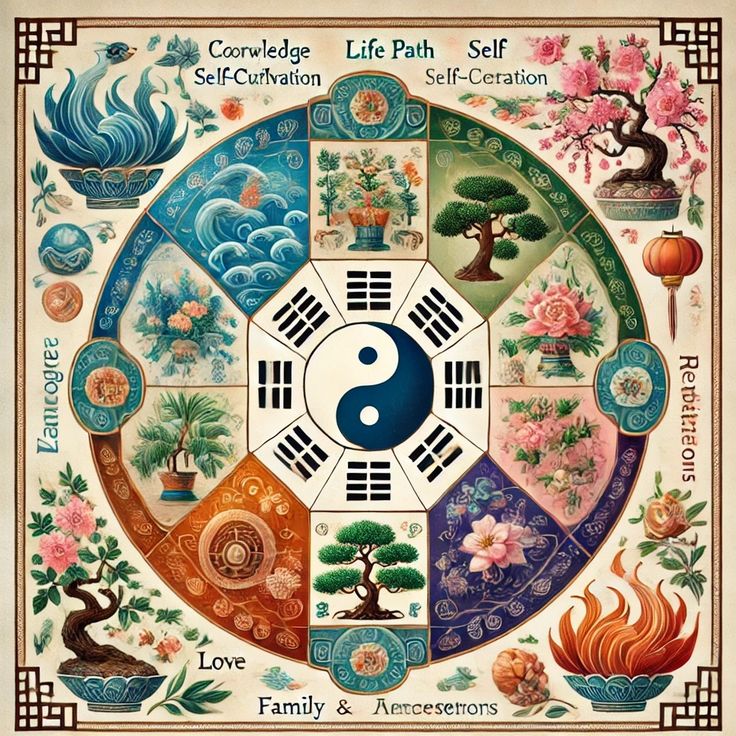
What Is the Bagua Map?
The Bagua Map is an important Feng Shui tool used to analyze energy areas in a home.
It divides your space into 9 life areas:
- Wealth & Abundance
- Fame & Reputation
- Love & Relationships
- Family
- Health
- Creativity
- Knowledge
- Career
- Helpful People
Each area connects to a specific direction and life theme. By improving energy in these zones, you can improve that area of life.
Feng Shui Directions and Their Meaning
Each direction has special energy:
- North – Career & life path
- South – Fame & recognition
- East – Family & health
- West – Creativity & children
- Northeast – Knowledge & wisdom
- Northwest – Helpful people & mentors
- Southeast – Wealth & prosperity
- Southwest – Love & relationships
- Center – Overall balance and health
Arranging your space according to directions improves energy flow.
Basic Feng Shui Tips for Home
You can apply simple Feng Shui without major renovations.
Declutter Your Space
Clutter blocks energy. Clean spaces allow positivity to flow.
Keep Entrance Clean
Your main door is called the mouth of Chi. Keep it clean, bright, and welcoming.
Use Natural Light
Sunlight increases positive energy and mood.
Add Indoor Plants
Plants bring life energy and freshness.
Fix Broken Items
Broken items represent stagnation. Repair or remove them.
Avoid Sharp Corners
Sharp edges create harsh energy. Use rounded furniture when possible.
Feng Shui for Bedroom
Bedroom energy affects sleep, relationships, and emotional health.
Best practices:
- Bed should have a solid headboard
- Avoid mirror directly facing the bed
- Use soft lighting
- Keep electronics minimal
- Avoid clutter under the bed
- Use calming colors like pastel shades
A well-balanced bedroom promotes peaceful sleep and stronger relationships.
Feng Shui for Wealth and Prosperity
To attract abundance:
- Keep the southeast corner clean
- Place a healthy plant in the wealth area
- Use symbols of abundance (gold colour, coins, crystals)
- Avoid leaking taps (symbol of money loss)
- Keepyour wallet and financial documents organised
Feng Shui does not replace hard work but supports positive financial energy.
Feng Shui for Career Growth
Career energy is linked to the north direction.
Tips:
- Keep your workspace clutter-free
- Use dark blue or black elements (water energy)
- Place a motivational object on your work desk
- Sit with a wall behind you for support energy
This improves focus, confidence, and opportunities.
Feng Shui for Love and Relationships
Relationship energy is connected with the southwest direction.
Tips:
- Keep this area clean and well-lit
- Use pairs of objects (two candles, two cushions)
- Display romantic images
- Avoid lonely symbols
- Use soft colours like pink and peach
These small changes can positively influence emotional harmony.
Feng Shui for Office and Business
Many entrepreneurs use Feng Shui for business success.
Key principles:
- Sit facing the door while working
- Keepthe desk organised
- Avoid sitting with back to door
- Use plants to attract growth energy
- Use good lighting to boost motivation
A balanced office space improves productivity and decision-making.
Benefits of Feng Shui
People follow Feng Shui for many reasons:
- Better mental peace
- Reduced stress
- Improved relationships
- Better sleep
- Financial stability
- Career clarity
- Positive atmosphere
- Emotional balance
works not by magic, but by improving how you feel and function in your space.
Common Myths About Feng Shui
It is a superstition
It is energy-based environmental psychology
It is only about decoration
It is about energy balance and placement
Feng Shui brings instant miracles
It supports gradual positive change
Feng Shui works best when combined with a positive mindset and action.
Feng Shui vs Vastu Shastra
| Feng Shui | Vastu Shastra |
|---|---|
| Originated in China | Originated in India |
| Focus on energy flow | Focus on directions & elements |
| Uses the Bagua map | Uses Vastu Purusha Mandala |
| Flexible application | More structure-based |
| Can be applied anywhere | Often applied during construction |
Both aim to bring harmony between humans and the environment.
How to Start Learning
If you want to explore :
- Start with decluttering
- Observe energy in your space
- Learn basic directions
- Apply one area at a time
- Use intention while making changes
- Be patient and consistent
Even small changes can create noticeable improvements in mood and atmosphere.
Final Thoughts
It is not about superstition or fear. It is about living consciously with your environment. Your surroundings constantly influence your thoughts, emotions, and actions.
When your space is balanced:
- You feel lighter
- Your mind feels clearer
- Relationships improve
- Opportunities flow naturally
The teachings that your home is not just a place to live — it is a living energy field that supports your life journey.
Want to improve the energy of your home or office?
Book your personalised Feng Shui consultation today and transform your space into a magnet for peace, prosperity, and positivity.